
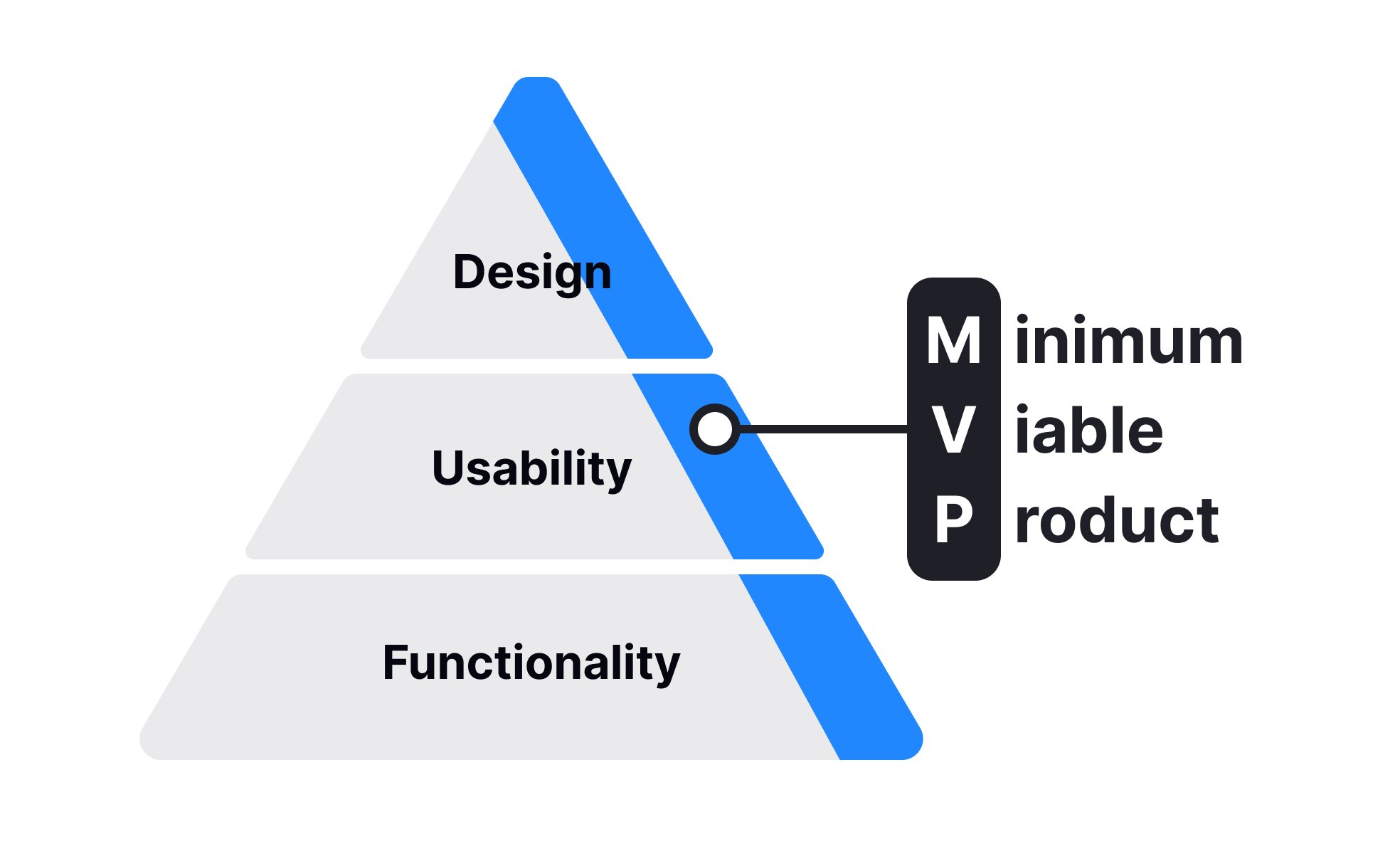
A Minimum Viable Product (MVP) is not just a prototype — it’s a strategic tool for validating ideas, attracting investors, and laying the foundation for a scalable product. This article explains how to design and develop an MVP that can evolve into a fully functional, market-ready solution without wasting time or resources.
What Is an MVP and Why It Matters
An MVP (Minimum Viable Product) is a simplified version of your product that includes only the core features necessary to solve a specific problem for your target audience. The goal is to validate the concept quickly and collect user feedback before investing in full-scale development.
Building an MVP allows startups and enterprises to:
- Test product-market fit early.
- Reduce development risks.
- Attract investors with tangible results.
- Get to market faster and smarter.
The MVP Mindset: Build → Measure → Learn
An effective MVP follows the Lean Startup methodology — an iterative process focused on real-world validation.
- Build: Create a minimal yet functional version of the product.
- Measure: Track key performance indicators (user engagement, retention, conversions).
- Learn: Use data-driven insights to adjust your roadmap and prioritize future development.
This cycle ensures that every new feature is based on real customer behavior, not assumptions.
Steps to Building a Scalable MVP
Step 1. Define the Problem and Target Audience
Before writing a single line of code, identify the pain points your product addresses and who your ideal users are. Clarity here helps focus on what truly matters.
Step 2. Prioritize Core Features
Focus only on essential features that deliver value. Use the MoSCoW method (Must have, Should have, Could have, Won’t have) to separate critical functionality from nice-to-haves.
Step 3. Choose the Right Tech Stack
Select technologies that support future growth. At Richman Software Development, we often recommend:
- Frontend: React, Vue, or Flutter (for cross-platform apps).
- Backend: Node.js or Python with scalable frameworks (Express, Django).
- Database: PostgreSQL or MongoDB.
- Infrastructure: AWS or Google Cloud for auto-scaling.
Step 4. Design for Flexibility
Even at the MVP stage, design with scalability in mind — use modular architecture and API-first principles so you can easily add new services later.
Step 5. Launch, Gather Feedback, Iterate
Deploy your MVP quickly, collect user data, and adjust features or UX accordingly. Remember — early feedback is more valuable than perfect design.
Key Mistakes to Avoid
- Overbuilding: Don’t add every feature at once — simplicity wins.
- Ignoring scalability: Avoid short-term tech hacks that block future growth.
- Skipping user testing: Real feedback is more important than assumptions.
- Neglecting analytics: Without metrics, you can’t measure success or pivot effectively.
Real-World Example
One of our clients came to Richman Software Development with an idea for a personalized financial app. We developed a functional MVP in just 100 hours, including secure authentication, basic analytics, and cloud integration.
After validating user engagement and gathering feedback, we expanded it into a fully scalable fintech platform — now supporting thousands of users across multiple regions.
This approach saved months of development and provided a proven business model before large-scale investment.
Turning MVP into a Scalable Product
Once the MVP shows traction:
- Refactor the architecture for scalability.
- Integrate CI/CD pipelines for faster updates.
- Enhance performance with caching, load balancing, and microservices.
- Add advanced features (AI, automation, analytics) based on user demand.
At Richman, our process ensures your MVP evolves seamlessly — from prototype to enterprise-grade product — without the need to start from scratch.
Why Work with an Experienced MVP Partner
Building an MVP that scales requires experience, not just coding. A seasoned team can:
- Identify high-impact features faster.
- Prevent architectural bottlenecks.
- Optimize infrastructure costs.
- Provide technical and business consulting at every step.
Richman Software Development specializes in end-to-end MVP development, offering ready-made packages like PoC (Proof of Concept) development and 100-hour MVP builds for startups and enterprises.
A successful MVP is more than a quick launch — it’s a strategic foundation for long-term success. By combining the right development process, technology stack, and partner, businesses can move from idea to scalable product efficiently and confidently.
At Richman Software Development, we help you validate ideas, minimize risks, and build solutions that grow with your users.