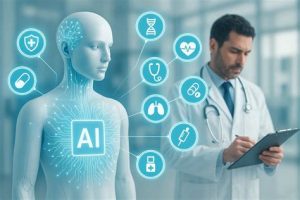
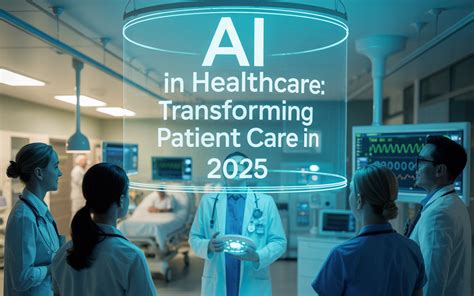
Healthcare systems worldwide are under pressure to reduce costs, improve outcomes, and scale patient care. Artificial Intelligence (AI) is a transformative solution, enabling predictive analytics, faster diagnostics, personalized treatments, and optimized hospital operations.
AI adoption in healthcare is not just a trend—it is becoming essential for modern care delivery and operational efficiency.
Current Challenges in Healthcare
- Overloaded healthcare staff
- Fragmented data across systems
- Rising costs of treatment and administration
- Delayed or inaccurate diagnoses
- Limited patient engagement and adherence
AI addresses these challenges by automating routine tasks, analyzing complex datasets, and providing actionable insights.
AI Applications in Healthcare
Predictive Analytics
- Forecast disease outbreaks
- Predict hospital admissions
- Optimize resource allocation
AI-Powered Diagnostics
- Image recognition for radiology and pathology
- Early detection of conditions (cancer, diabetic retinopathy)
- Natural Language Processing (NLP) for medical records
Patient Engagement & Remote Monitoring
- Virtual health assistants and chatbots
- Wearable device analytics
- Personalized treatment recommendations
Operational Efficiency
- Workflow automation in hospitals
- Supply chain and inventory management
- Staffing optimization
Regulatory Considerations and Data Privacy
Healthcare AI must comply with regulations:
- HIPAA (US) / GDPR (EU)
- Data anonymization and secure storage
- Algorithm transparency and auditability
Trust is critical for adoption among patients and providers.
Future of AI in Healthcare
- Integration with IoT and wearable devices
- AI-driven clinical trials and drug discovery
- Predictive and preventive medicine at scale
- AI-assisted robotic surgery and telemedicine
The convergence of AI, cloud computing, and digital health devices will redefine patient care and operational excellence.