Healthcare is undergoing one of the most significant technological transformations in its history. Rising patient expectations, increasing operational costs, workforce shortages, and the growing complexity of medical data are placing unprecedented pressure on healthcare providers worldwide.
At the same time, hospitals, clinics, pharmaceutical companies, and medical research institutions generate enormous amounts of information every day. Electronic health records, diagnostic imaging, laboratory results, wearable devices, genomic data, and patient monitoring systems collectively produce datasets that are far too large for traditional analytical approaches.
Artificial Intelligence is helping organizations transform this complexity into actionable insights.
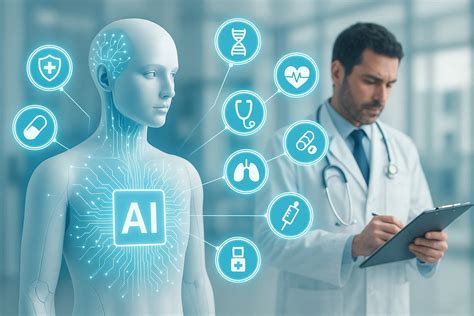
Rather than replacing healthcare professionals, AI augments clinical expertise by supporting faster diagnostics, improving treatment planning, automating administrative processes, and enabling predictive decision-making.
Healthcare organizations are increasingly adopting AI not because it is a technological trend, but because it addresses real business and clinical challenges. The result is improved patient outcomes, more efficient operations, and better utilization of limited medical resources.
Why Healthcare Needs Artificial Intelligence
Healthcare systems face a unique combination of operational and clinical challenges.
Medical professionals spend significant portions of their working day completing administrative tasks instead of treating patients.
Diagnostic procedures continue to become more sophisticated, generating larger volumes of imaging and laboratory data that require careful interpretation.
At the same time, healthcare organizations must balance patient safety, regulatory compliance, cost efficiency, and growing demand for services.
Artificial Intelligence helps address these challenges by processing information at a scale and speed that would be impossible through manual analysis alone.
Instead of replacing physicians, AI functions as an intelligent decision-support system capable of identifying patterns, highlighting potential risks, and providing evidence-based recommendations.
What Are AI Healthcare Solutions?
AI healthcare solutions combine machine learning, computer vision, natural language processing, predictive analytics, and automation technologies to improve clinical and operational workflows.
Depending on organizational goals, AI may be used for:
- clinical decision support
- medical imaging analysis
- patient risk prediction
- virtual healthcare assistants
- appointment scheduling
- hospital resource planning
- fraud detection
- pharmaceutical research
- remote patient monitoring
Each implementation focuses on solving specific operational or clinical problems while maintaining compliance with healthcare regulations and protecting patient privacy.
Clinical Decision Support
One of the most valuable applications of AI in healthcare is assisting physicians during diagnosis and treatment planning.
Modern AI systems analyze:
- patient history
- laboratory results
- imaging studies
- clinical guidelines
- scientific literature
to provide recommendations that support medical decision-making.
These systems help clinicians identify potential conditions, prioritize diagnostic pathways, and reduce the likelihood of overlooking important information.
Importantly, AI does not replace medical judgment. Final clinical decisions remain the responsibility of qualified healthcare professionals.
Medical Imaging and Computer Vision
Medical imaging generates vast amounts of visual data every day.
Radiologists interpret thousands of:
- X-rays
- CT scans
- MRI studies
- ultrasound images
- mammograms
Artificial Intelligence powered by computer vision can assist by identifying abnormalities, measuring anatomical structures, and highlighting regions that require closer examination.
Applications include:
- tumor detection
- fracture identification
- pulmonary disease screening
- cardiovascular analysis
- ophthalmology diagnostics
AI systems reduce interpretation time while improving consistency, particularly in high-volume healthcare environments.
Predictive Analytics in Patient Care
Predictive analytics enables healthcare providers to identify risks before serious complications develop.
Machine learning models analyze historical and real-time patient data to estimate the likelihood of events such as:
- hospital readmission
- disease progression
- complications after surgery
- patient deterioration
- medication adherence
These predictions allow clinicians to intervene earlier, improving patient outcomes and reducing treatment costs.
For hospitals, predictive analytics also supports capacity planning and resource allocation by forecasting patient admissions and demand for medical services.
Virtual Health Assistants
Conversational AI has become increasingly common in healthcare.
AI-powered assistants help patients by:
- scheduling appointments
- answering frequently asked questions
- providing medication reminders
- collecting symptoms before consultations
- guiding patients through administrative procedures
Healthcare staff also benefit from virtual assistants that automate documentation, retrieve medical information, and simplify internal communication.
This reduces administrative workload while improving the overall patient experience.
AI in Drug Discovery and Research
Pharmaceutical research traditionally requires years of experimentation and significant financial investment.
Artificial Intelligence accelerates many stages of the drug discovery process.
Machine learning algorithms analyze molecular structures, predict biological interactions, and identify promising drug candidates much faster than conventional methods.
Researchers also use AI to optimize clinical trial design, identify eligible participants, and monitor treatment outcomes more efficiently.
These capabilities have the potential to shorten development timelines while reducing research costs.
Operational Efficiency in Healthcare
Beyond clinical applications, AI plays an increasingly important role in hospital operations.
Healthcare organizations use AI to optimize:
- appointment scheduling
- workforce planning
- operating room utilization
- inventory management
- billing processes
- claims processing
Administrative automation allows healthcare professionals to spend more time delivering care rather than performing repetitive tasks.
Data Security and Compliance
Healthcare organizations manage highly sensitive patient information, making security and regulatory compliance essential.
AI solutions must comply with frameworks such as:
- HIPAA
- GDPR
- regional healthcare regulations
- cybersecurity standards
Best practices include:
- end-to-end encryption
- role-based access control
- audit logging
- anonymization of training data
- continuous monitoring
Responsible AI implementation requires governance mechanisms that ensure transparency, accountability, and patient trust.
Challenges of AI Adoption
Despite its potential, implementing AI in healthcare presents several challenges.
Data Quality
Medical records often contain incomplete or inconsistent information, reducing model accuracy.
System Integration
Hospitals frequently operate multiple legacy systems that must be integrated with modern AI platforms.
Regulatory Approval
Clinical AI solutions may require validation and regulatory approval before deployment.
Ethical Considerations
Organizations must ensure that AI models are transparent, unbiased, and explainable, particularly when supporting clinical decisions.
Successful adoption depends on balancing technological innovation with patient safety and ethical responsibility.
Measuring Business Value
Healthcare organizations should evaluate AI initiatives using measurable outcomes.
Common performance indicators include:
- reduced diagnostic turnaround time
- lower hospital readmission rates
- improved treatment accuracy
- shorter patient waiting times
- increased operational efficiency
- lower administrative costs
- improved patient satisfaction
- optimized resource utilization
Focusing on measurable business and clinical objectives helps ensure that AI investments deliver sustainable value.
The Future of AI in Healthcare
Artificial Intelligence is expected to become an integral part of healthcare delivery.
Emerging trends include:
Personalized Medicine
AI models will analyze genetic, clinical, and lifestyle data to recommend individualized treatment plans.
Digital Twins
Virtual representations of patients may enable clinicians to simulate treatment options before applying them in practice.
Autonomous Clinical Documentation
AI assistants will automatically generate consultation notes and update electronic health records, reducing administrative burdens.
Continuous Remote Monitoring
Wearable devices combined with predictive AI will enable earlier detection of health issues and more proactive care management.
These innovations will support a shift from reactive treatment toward preventive and personalized healthcare.
Artificial Intelligence is reshaping healthcare by enabling organizations to make faster decisions, improve diagnostic accuracy, streamline operations, and deliver more personalized patient care.
The greatest value of AI lies not in replacing healthcare professionals but in empowering them with intelligent tools that enhance expertise, reduce administrative workloads, and support evidence-based decision-making.
As healthcare systems continue to evolve, organizations that strategically invest in AI solutions will be better positioned to improve patient outcomes, optimize operational efficiency, and meet the growing demands of modern medicine.