
Real-time communication has become an essential feature for modern digital platforms. Applications such as video conferencing tools, live streaming platforms, online gaming environments, and virtual collaboration systems rely on technologies that enable low-latency communication between users.
WebRTC (Web Real-Time Communication) is an open-source technology that enables peer-to-peer audio, video, and data streaming directly within web browsers, without requiring additional plugins or external software.
Companies building interactive digital experiences increasingly rely on WebRTC to deliver real-time capabilities.
How WebRTC Works
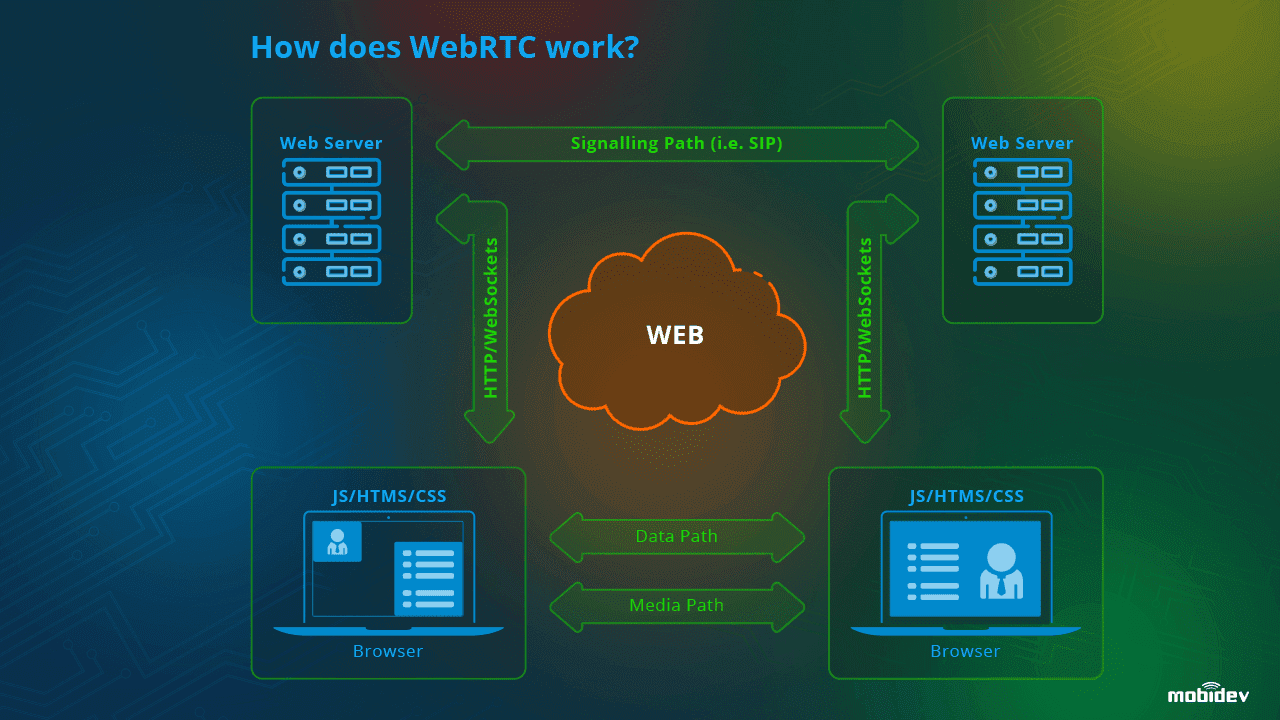
WebRTC enables direct communication between devices through peer-to-peer connections.
The core components include:
- MediaStream API – captures audio and video data
- RTCPeerConnection – manages peer connections
- RTCDataChannel – enables real-time data exchange
These components allow developers to build complex communication platforms within web applications.
Key Use Cases
Video Conferencing Platforms
WebRTC powers many modern communication tools by enabling:
- real-time video calls
- screen sharing
- group conferencing
- interactive collaboration
Real-Time Gaming
Multiplayer gaming platforms use WebRTC to exchange real-time data between players.
Low latency communication ensures smooth gameplay and synchronized actions.
Live Streaming Platforms
WebRTC can deliver ultra-low latency streaming, making it ideal for:
- interactive broadcasts
- live auctions
- esports tournaments
- remote collaboration tools
Remote Visualization and Pixel Streaming
WebRTC is often used for remote rendering and streaming 3D environments, including applications built with Unreal Engine.
This technology enables users to interact with high-performance 3D environments through standard web browsers.
Architecture of WebRTC Systems
WebRTC applications often include additional infrastructure such as:
- signaling servers
- STUN/TURN servers
- media servers for scaling
These components help establish connections and support large-scale deployments.
Challenges and Optimization
Developers must address several challenges when implementing WebRTC systems:
- network latency
- NAT traversal
- bandwidth optimization
- security considerations
Advanced monitoring tools help maintain connection stability and quality.
Future of Real-Time Applications
WebRTC will continue to power the next generation of digital experiences, including:
- immersive metaverse environments
- remote collaboration tools
- cloud gaming platforms
- virtual training systems
As internet infrastructure improves, real-time communication will become a core feature of most digital platforms.