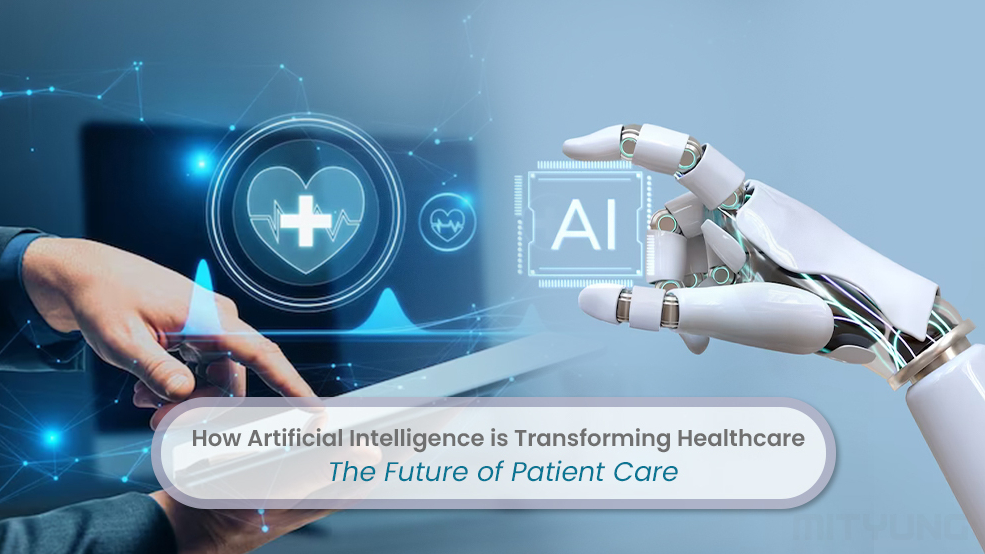
Artificial Intelligence is driving a revolution in healthcare by enhancing diagnostics, optimizing treatment plans, improving patient monitoring, and reducing operational costs. This article explores how ML, NLP, and computer vision are transforming hospitals, clinics, biotech companies, and digital health platforms.
Healthcare systems worldwide are under pressure due to rising patient volumes, workforce shortages, and increasing costs. AI and machine learning offer powerful solutions to these challenges, enabling faster diagnostics, smarter treatment decisions, and more efficient operations.
AI is not replacing doctors — it’s giving them superpowers.
AI-Enhanced Diagnostics
Machine learning models can analyze medical data much faster and more accurately than traditional methods.
Key diagnostic applications:
Medical imaging analysis (X-rays, MRI, CT scans)
Cancer detection using deep learning
Cardiovascular risk prediction
Ophthalmology screening for early-stage diseases
Pathology image classification
Benefits:
Earlier detection
Fewer false positives/negatives
Improved patient outcomes
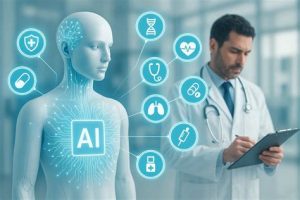
AI systems often serve as a second set of “eyes” for radiologists and clinicians.
Predictive Healthcare Analytics
AI models analyze historical patient data to identify risks and predict health events before they occur.
Predictive ML can forecast:
probability of readmission
chronic disease progression
patient deterioration
sepsis or infection risk
ICU length of stay
Hospitals use these insights to intervene early and reduce emergency cases.
Personalized Treatment Plans
AI helps doctors provide tailored therapies based on patient-specific data.
Personalization includes:
genetic profiling
treatment response prediction
optimal medication dosage
risk-based stratification
This leads to more effective therapies and fewer side effects.
AI-Powered Remote Patient Monitoring
With the rise of telemedicine, AI improves continuous patient monitoring at home.
Technologies involved:
wearable devices
smart medical sensors
anomaly detection algorithms
real-time alerts to clinicians
Use cases:
heart rate and ECG tracking
glucose monitoring for diabetes
post-surgery follow-ups
behavioral health monitoring
NLP for Medical Documentation and Clinical Support
Natural Language Processing (NLP) streamlines medical documentation — one of the biggest time drains for clinicians.
NLP use cases:
automated medical transcription
summarizing doctor-patient conversations
extracting insights from electronic health records (EHR)
clinical decision support via chat-like interfaces
NLP reduces paperwork and frees clinicians to spend more time with patients.
Operational Automation in Hospitals
AI helps healthcare institutions reduce operational overhead.
Automation includes:
appointment scheduling
triage systems
insurance claim processing
supply chain optimization
patient flow prediction
These improvements reduce costs and enhance hospital efficiency.
Drug Discovery and Biotech Applications
Machine learning accelerates drug development processes dramatically.
AI contributes to:
predicting molecule behavior
identifying new compounds
optimizing clinical trials
simulations for drug efficacy and toxicity
What once took years now takes months.
Ethical and Regulatory Considerations
AI in healthcare must adhere to strict safety, compliance, and data privacy standards.
Key considerations:
HIPAA/GDPR compliance
transparent AI decision-making
bias mitigation
patient consent
clinical validation
Responsible AI is essential in medicine.
AI is transforming healthcare across diagnostics, patient care, operations, drug discovery, and remote monitoring. As medical institutions continue adopting machine learning, the result is a more efficient, accessible, and patient-centered healthcare system.