
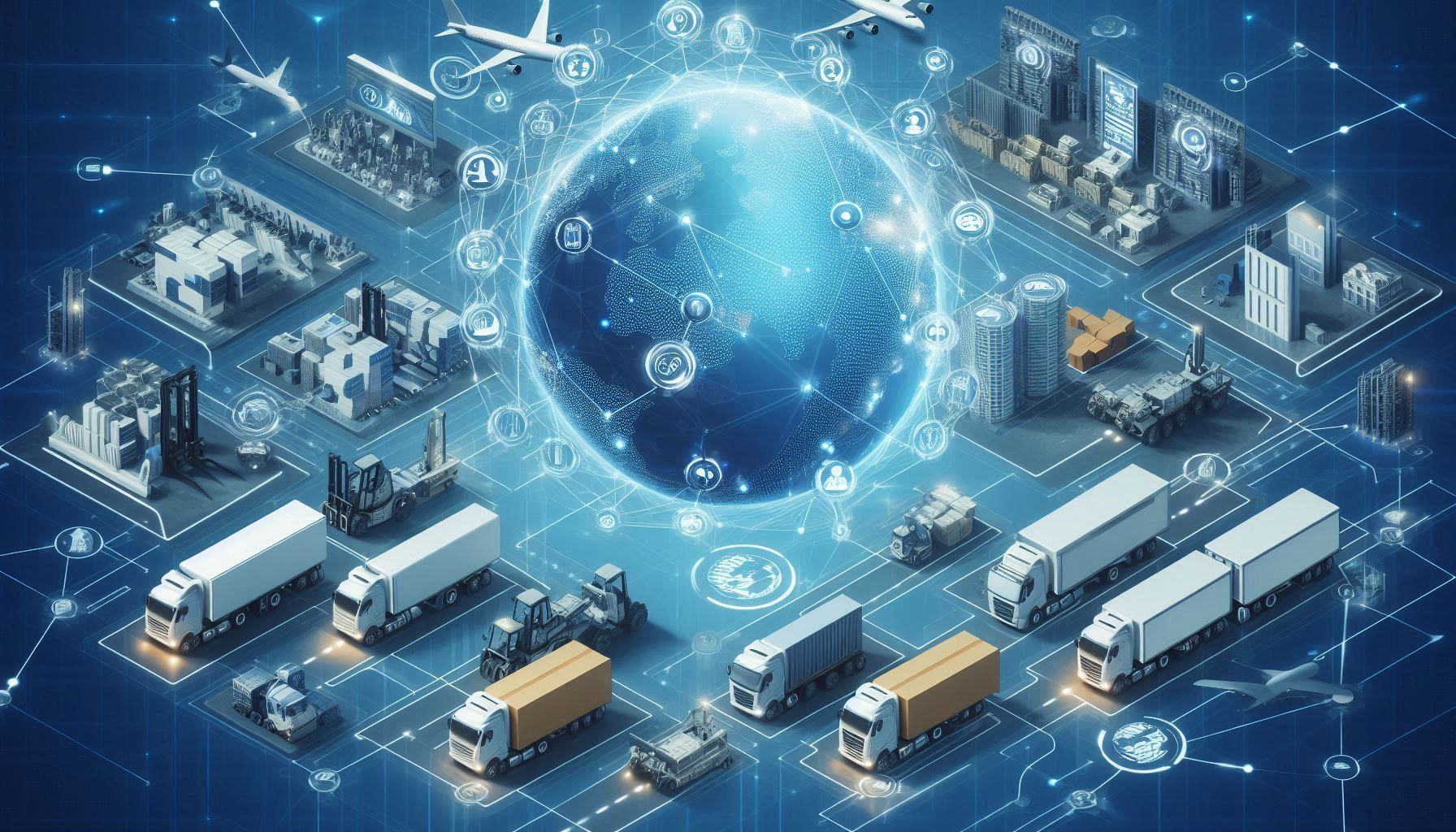
Global supply chains are becoming increasingly complex due to rising consumer expectations, global trade expansion, and unpredictable market conditions.
Artificial Intelligence is helping logistics companies address these challenges by providing advanced analytics, automation, and predictive insights.
AI-driven logistics platforms enable businesses to:
- forecast demand accurately
- optimize delivery routes
- reduce operational costs
- improve supply chain visibility
As a result, AI has become a key technology for building resilient and efficient supply chain ecosystems.
Key Challenges in Logistics
Traditional logistics systems often struggle with:
- inefficient route planning
- unpredictable demand fluctuations
- inventory management complexity
- delayed shipments and disruptions
AI solutions can address these problems by analyzing historical data and generating predictive insights.
AI Applications in Logistics
Route Optimization
Machine learning algorithms analyze traffic patterns, delivery constraints, and historical transportation data to determine optimal delivery routes.
Benefits include:
- reduced fuel costs
- faster delivery times
- improved fleet efficiency
Demand Forecasting
AI models analyze market data and historical sales patterns to forecast product demand.
Accurate demand predictions help companies:
- prevent stock shortages
- reduce overproduction
- improve inventory planning
Warehouse Automation
AI-powered robotics and automation systems improve warehouse operations by enabling:
- intelligent product sorting
- automated inventory tracking
- optimized storage allocation
These technologies significantly increase warehouse efficiency.
Predictive Maintenance
AI models analyze sensor data from vehicles and logistics equipment to predict potential failures before they occur.
Predictive maintenance helps reduce downtime and repair costs.
Data Infrastructure for Logistics AI
Logistics AI platforms require large volumes of operational data.
Data sources may include:
- GPS tracking systems
- IoT sensors
- warehouse management systems
- supply chain management software
Cloud infrastructure enables real-time data processing and advanced analytics.
Future Trends
The future of AI-driven logistics includes:
- autonomous delivery vehicles
- drone-based shipping systems
- fully automated warehouses
- real-time global supply chain monitoring
AI will play a crucial role in building intelligent logistics networks capable of adapting to rapidly changing market conditions.