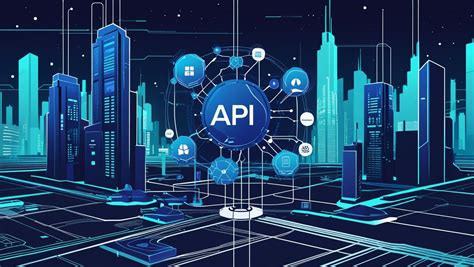
Modern software systems are no longer isolated applications. They are distributed ecosystems of services, platforms, and third-party integrations that must communicate seamlessly.
At the core of this ecosystem are APIs (Application Programming Interfaces). APIs define how systems interact, exchange data, and execute business logic across different environments.
In enterprise-grade systems, API design is not just a technical task — it is a strategic architectural decision that directly impacts scalability, performance, and long-term maintainability.
Poor API architecture leads to tightly coupled systems, integration bottlenecks, and high maintenance costs. Well-designed APIs, on the other hand, enable modular, scalable, and highly extensible software ecosystems.
What Is API Development?
API development is the process of designing, building, and maintaining interfaces that allow different software systems to communicate.
A modern API typically handles:
- data exchange between frontend and backend
- integration with external services
- communication between microservices
- third-party platform connectivity
APIs act as the contract layer between systems, ensuring structured and predictable communication.
Types of APIs in Modern Systems
REST APIs
REST (Representational State Transfer) is the most widely used API architecture.
Key characteristics:
- stateless communication
- HTTP-based requests
- JSON or XML data formats
- resource-oriented design
REST APIs are widely adopted due to simplicity and scalability.
GraphQL APIs
GraphQL allows clients to request exactly the data they need.
Advantages:
- reduced over-fetching of data
- flexible query structure
- single endpoint architecture
- efficient for complex UI systems
GraphQL is often used in frontend-heavy applications and mobile apps.
gRPC APIs
gRPC is a high-performance API framework based on HTTP/2.
It is commonly used for:
- microservices communication
- low-latency systems
- internal backend architecture
API Architecture in Enterprise Systems
In large-scale systems, APIs are rarely isolated. They are part of a broader architecture that includes:
- API Gateway
- Microservices layer
- Authentication services
- Data storage systems
- External integrations
API Gateway Role
An API gateway acts as a central entry point for all requests. It handles:
- routing
- authentication
- rate limiting
- logging
- request transformation
API Security Considerations
Security is one of the most critical aspects of API development.
Authentication Methods
- OAuth 2.0
- JWT (JSON Web Tokens)
- API keys
Common Security Risks
- unauthorized access
- data leakage
- injection attacks
- broken authentication
Security Best Practices
- encrypt all traffic using HTTPS
- implement strict access control
- validate all inputs
- use rate limiting
- monitor API usage patterns
API Integration in Modern Ecosystems
APIs are not only internal communication tools — they are also the backbone of external integrations.
Common integrations include:
- payment gateways (Stripe, PayPal)
- cloud services (AWS, Azure, GCP)
- CRM systems (Salesforce, HubSpot)
- analytics platforms
- AI services (OpenAI, ML APIs)
This creates a connected digital ecosystem where systems continuously exchange data.
Microservices and API Communication
In microservices architecture, APIs are the primary communication mechanism between services.
This introduces several challenges:
- network latency
- service discovery
- data consistency
- versioning issues
To solve these, systems often use:
- service meshes
- message brokers (Kafka, RabbitMQ)
- event-driven communication
API Versioning Strategy
As systems evolve, APIs must remain backward compatible.
Common versioning strategies include:
- URI versioning (/v1/, /v2/)
- header-based versioning
- query parameter versioning
Proper versioning ensures smooth system evolution without breaking existing clients.
Performance Optimization
API performance directly impacts user experience.
Optimization techniques include:
- caching (Redis, CDN)
- pagination for large datasets
- compression (gzip/brotli)
- asynchronous processing
- database indexing optimization
Observability and Monitoring
Enterprise APIs require continuous monitoring.
Key metrics include:
- response time
- error rate
- request volume
- latency distribution
Tools used:
- Prometheus
- Grafana
- ELK Stack
- Datadog
API Lifecycle Management
A mature API goes through several stages:
- Design (OpenAPI/Swagger)
- Development
- Testing
- Deployment
- Monitoring
- Deprecation
Proper lifecycle management ensures system stability and long-term scalability.
Future of APIs
APIs are evolving toward more intelligent and autonomous systems:
- AI-generated APIs
- event-driven architectures
- real-time streaming APIs
- serverless API functions
- API marketplaces
In the future, APIs will act as programmable business interfaces, not just technical connectors.
API development is the foundation of modern software architecture. Well-designed APIs enable scalable systems, seamless integrations, and long-term maintainability.
For enterprise systems, API strategy is not optional — it is a core part of digital transformation